
The social media landscape is no longer just a digital billboard for your brand; it’s a dynamic ecosystem of communities, algorithms, and conversations that demand sophisticated engagement. Generic advice and haphazard posting schedules fall flat. To achieve meaningful growth, drive conversions, and build a loyal following, you need a modern, integrated playbook built on proven social media marketing strategies. This guide moves beyond the surface-level tips, offering a comprehensive roundup of 12 powerful frameworks that top brands and creators are using right now to dominate their niches.
We’ll dissect the critical components of a successful online presence, from establishing authority through content pillars and thought leadership to fostering vibrant communities and leveraging data-driven personalization. Each strategy presented is a crucial piece of a cohesive marketing machine, designed to help you not just participate in the online conversation, but to actively lead it. You’ll gain actionable insights into platform-native short-form video, paid advertising optimization, and crisis management through social listening.
Forget the basics of simply being present on social media. This article provides a detailed roadmap for strategically building an influential, engaged, and profitable online brand. Prepare to transform your approach and master the techniques that separate fleeting trends from lasting success. We will cover everything you need to build a comprehensive plan, ensuring your efforts translate directly into measurable results and sustainable audience growth.
1. Content Pillars and Topic Clustering
Content pillars are a cornerstone of effective social media marketing strategies, providing a structured framework to ensure your content is consistent, relevant, and authoritative. This approach involves defining 3-5 core topics, or “pillars,” that directly align with your brand’s expertise and your audience’s primary interests. Each pillar then serves as a foundation from which you can develop a wide array of related subtopics, creating a comprehensive content ecosystem. This method moves beyond random posting, establishing your brand as a go-to resource on specific subjects.

The primary benefit is building topical authority. When you consistently create high-quality content around a focused set of themes, social media algorithms and search engines begin to recognize your credibility. This not only improves your visibility but also attracts a more engaged and relevant audience. For example, marketing giant HubSpot organizes its content around pillars like Inbound Marketing, Sales, and Customer Success, reinforcing their expertise in each domain.
How to Implement This Strategy
To put this into practice, start by brainstorming your core areas of expertise. A B2B tech company like Swype Inc. might choose pillars such as “AI in Marketing,” “Web3 Innovations,” and “Digital Advertising Trends.”
- Start Small: Begin with 3-5 pillars maximum to maintain focus and avoid diluting your message.
- Map the Customer Journey: Align specific subtopics within each pillar to different stages of your audience’s journey, from awareness to decision-making.
- Create a Content Matrix: Visualize how your pillars and subtopics interconnect. This helps plan content that can be repurposed across different formats, like turning a blog post into a series of TikTok videos or an Instagram carousel.
- Review and Refine: Analyze engagement data quarterly to see which pillars and topics resonate most. Be prepared to adjust your strategy based on performance and evolving audience interests.
2. Influencer, Strategic Partnerships, and Co-Marketing Initiatives
Collaborating with external partners is a powerful way to accelerate growth by tapping into established, trusted communities. This strategy involves partnering with creators, influencers, or complementary brands to expand reach, share audiences, and generate mutual value. Instead of building an audience from scratch, you leverage the credibility and reach of others. These initiatives can range from co-created content and affiliate programs to deep platform integrations, offering a scalable method to connect with highly targeted user segments.

The primary benefit is immediate access to a warm, engaged audience. A recommendation from a trusted influencer or a co-promotion with a respected brand acts as a powerful social proof signal, significantly shortening the customer’s trust-building journey. For leveraging external collaborations and driving viral growth, adopting influencer marketing best practices is an essential component of strategic partnerships. For example, a SaaS company like HubSpot builds a robust partner ecosystem, integrating with tools its audience already uses and creating a more valuable, interconnected experience.
How to Implement This Strategy
Start by identifying potential partners whose audiences overlap with your target demographic but who are not direct competitors. This ensures the collaboration is beneficial for both parties and provides genuine value to the audience.
- Prioritize Micro-Influencers: Focus on creators with 10,000 to 100,000 followers. They often boast higher engagement rates and a more dedicated niche audience.
- Define Clear KPIs: Before launching, establish what success looks like. Track metrics such as referral traffic, conversions from unique promo codes, and overall reach.
- Build Long-Term Relationships: Move beyond one-off transactional posts. Nurture partnerships to create authentic brand advocates who grow with you over time.
- Start with a Test Project: Propose a single content collaboration, like a joint webinar or an Instagram takeover, to gauge partnership viability and audience response before committing to a larger campaign.
3. Educational Content Marketing and Thought Leadership
Educational content marketing is a strategy focused on establishing your brand as a trusted industry authority by providing high-value, problem-solving information. Instead of direct promotion, this approach builds credibility and loyalty by teaching your audience something useful. It involves creating in-depth tutorials, guides, webinars, and original research that address your audience’s most pressing questions. This method shifts the brand-consumer dynamic from seller-buyer to teacher-student, fostering long-term trust.
The core benefit is building a dedicated following that views your brand as the definitive resource in its niche. When audiences seek reliable information, they turn to you first, which is invaluable for B2B, tech, and finance sectors. For instance, Moz dominates the SEO space with its comprehensive Learning Center and Whiteboard Friday video series, while Y Combinator provides unparalleled startup guidance, cementing their leadership positions not through ads, but through education.
How to Implement This Strategy
To execute this, you must deeply understand your audience’s pain points and knowledge gaps. A crypto company like Swype Inc. could develop a series on “Understanding DeFi” or “Blockchain Security Basics.”
- Identify Pain Points: Use tools like AnswerThePublic or survey your audience to find their most common questions.
- Create Cornerstone Content: Develop a few comprehensive “ultimate guides” or whitepapers on your core topics.
- Repurpose and Distribute: Break down large guides into smaller, platform-native formats like Instagram carousels, TikTok tutorials, or LinkedIn articles.
- Leverage Original Data: Publish case studies or reports based on your unique data to create content no one else has.
- Gate High-Value Assets: Offer your most in-depth resources, like e-books or templates, in exchange for an email address to build your marketing list.
4. Community Building and Engagement Strategy
A robust community building and engagement strategy shifts the focus from broadcasting messages to fostering genuine connections and conversations. This approach involves creating dedicated spaces where your audience can interact with each other and your brand, transforming passive followers into loyal advocates. By nurturing these hubs, whether on platforms like Discord, Reddit, or private Slack groups, you build a powerful, self-sustaining ecosystem that drives organic word-of-mouth and brand loyalty.
The core benefit is creating an authentic brand moat that competitors cannot easily replicate. Engaged communities provide invaluable feedback, user-generated content, and a direct line to your most passionate customers. For instance, software tool Notion has leveraged its vibrant community of template creators and power users to fuel product innovation and create a massive library of user-generated resources, amplifying its value far beyond its core features. This strategy is essential for building long-term customer relationships and brand equity.
How to Implement This Strategy
Begin by identifying where your target audience naturally gathers online and create a space that serves their needs, not just your marketing goals. A brand targeting developers might find success with a Discord server, while one focused on entrepreneurs could thrive on Reddit.
- Establish Clear Guidelines: Create and enforce community rules to ensure a safe, positive, and productive environment for all members.
- Assign Dedicated Managers: Appoint community managers or moderators to facilitate discussions, answer questions, and engage directly with members.
- Provide Exclusive Value: Offer community-only benefits like early access to features, exclusive content, or AMAs (Ask Me Anything) with team leaders or industry experts.
- Spotlight Members: Regularly feature user-generated content and celebrate member achievements to foster a sense of ownership and recognition within the group.
- Leverage Feedback: Actively listen to conversations and use the insights gathered to inform product development, content creation, and overall business strategy.
5. Data-Driven Personalization and Segmentation
Data-driven personalization is one of the most powerful social media marketing strategies for cutting through digital noise and delivering truly relevant experiences. This approach involves leveraging user analytics, customer data, and AI to segment your audience into distinct groups. By understanding their behaviors, preferences, and demographics, you can tailor content, offers, and messaging that resonate on an individual level, moving far beyond generic, one-size-fits-all broadcasts.
The core benefit of this strategy is a significant boost in engagement and conversion rates. When users see content that directly addresses their needs or interests, they are far more likely to interact and convert. For instance, Spotify excels at this by creating personalized playlists like “Discover Weekly,” which uses listening history to recommend new music with incredible accuracy, fostering deep user loyalty.
How to Implement This Strategy
To execute this strategy, you must systematically collect and analyze audience data to inform your content and advertising efforts. A company like Swype Inc. could use this to show ads for its AI marketing tool only to users who have previously engaged with content about digital advertising.
- Start with Personas: Create detailed customer personas based on actual data, not assumptions. Use analytics to identify common characteristics among your most engaged followers.
- Leverage Platform Tools: Use the built-in audience segmentation features on platforms like Facebook and LinkedIn to target ads based on demographics, interests, and online behavior.
- Track User Actions: Monitor key actions like clicks, video completion rates, and content shares to understand what resonates with different segments.
- Test and Validate: Implement A/B testing for your personalized campaigns. Test different messaging, creative, and offers on various segments to see what performs best and refine your approach accordingly.
6. Short-Form Video Content and Platform-Native Strategies
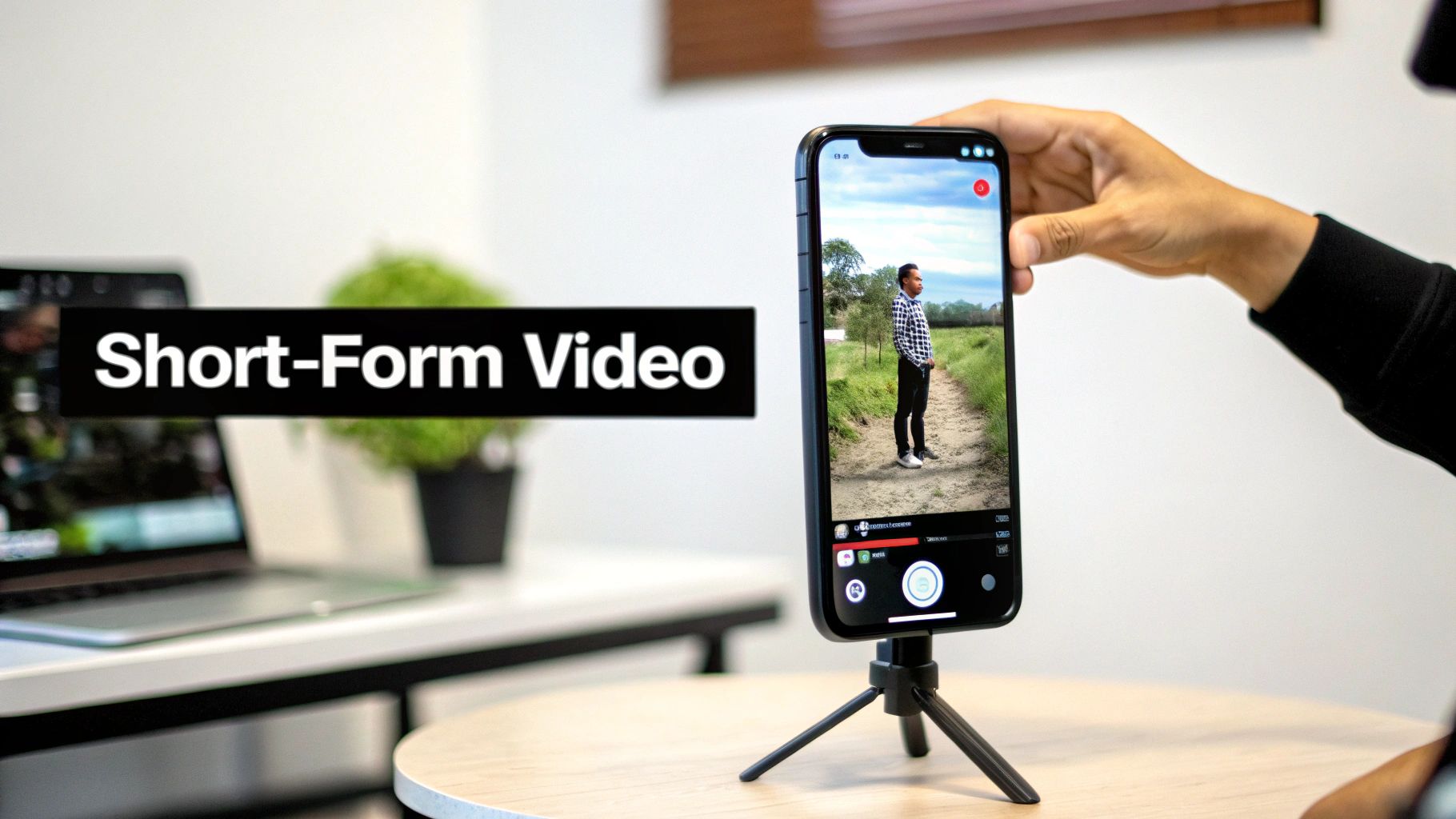
Short-form video is a dominant force in modern social media marketing strategies, leveraging platforms like TikTok, Instagram Reels, and YouTube Shorts to capture audience attention rapidly. This approach prioritizes creating content natively for each platform, embracing vertical formats, trending audio, and rapid-fire editing to align with algorithmic preferences. Instead of simply trimming down long-form content, this strategy involves crafting bespoke videos designed to be discovered and amplified, making it essential for reaching younger demographics and achieving viral growth.
The core benefit is algorithmic amplification. These platforms are built to push engaging, native short-form content to new audiences through “For You” pages and discovery feeds. This provides an unparalleled opportunity for organic reach that is often more challenging to achieve with static posts. For instance, small businesses can showcase behind-the-scenes content on TikTok, while tech educators use Instagram Reels to break down complex AI concepts, both tapping into platform-native trends to expand their visibility exponentially.
How to Implement This Strategy
To succeed, you must think like a native user, not just a marketer. Focus on content that provides value or entertainment quickly, hooking the viewer within the first three seconds.
- Design for Vertical: Always shoot and edit in a 9:16 aspect ratio. This is non-negotiable for an optimal mobile viewing experience.
- Embrace Trends Authentically: Use trending audio and participate in relevant challenges, but always adapt them to fit your brand’s voice and niche.
- Optimize for Silent Viewing: Add captions and text overlays. Many users watch videos without sound, and this ensures your message still lands.
- Post with High Frequency: Aim for consistency with 3-7 short videos per week. The algorithms favor active accounts, increasing the probability of one of your videos taking off.
- Analyze Key Metrics: Pay close attention to watch time, completion rate, and shares. These signals are more important to the algorithm than just likes or comments.
7. Search Engine Optimization and Organic Search Strategy
Integrating search engine optimization (SEO) into your social media marketing strategies transforms your profiles from mere communication channels into powerful, long-term discovery assets. This approach involves optimizing your social content and profiles to rank not only within platform-specific searches (like on YouTube or LinkedIn) but also on traditional search engines like Google. By treating social media as part of a broader organic search ecosystem, you create durable pathways for your target audience to find you, capturing intent-driven traffic well beyond the short lifespan of a typical social post.
The core benefit is evergreen visibility. While a tweet’s engagement may fade in hours, a well-optimized YouTube tutorial or LinkedIn article can attract consistent traffic for years. This is because it answers specific questions users are actively searching for. For instance, Brian Dean of Backlinko has mastered this by creating in-depth YouTube videos on SEO topics that rank high on both YouTube and Google, continuously generating leads and cementing his authority in the niche.
How to Implement This Strategy
To effectively merge SEO with social media, focus on creating content that directly addresses the search queries of your audience. This requires a shift from purely engagement-driven posts to value-driven, searchable resources.
- Conduct Keyword Research: Use tools like Semrush or Ahrefs to identify long-tail keywords your audience is searching for. These are specific, less competitive phrases that indicate high intent.
- Optimize Your Profiles: Treat your social media bios like a search engine listing. Incorporate primary keywords naturally and include a clear value proposition that tells users and algorithms what you’re about.
- Create Searchable Content: Develop comprehensive guides, tutorials, and in-depth threads that target specific topic clusters. A developer-focused blog like Dev.to sees its articles rank for programming queries because they are structured as definitive answers.
- Optimize for Each Platform: Tailor your SEO approach. For YouTube, focus on keyword-rich titles, descriptions, and tags. For LinkedIn articles and X threads, use clear headings and structure your content to be easily scannable and indexable by Google.
8. Live Streaming and Real-Time Engagement
Live streaming is a powerful social media marketing strategy that fosters direct, real-time interaction with your audience. Broadcasting on platforms like Instagram Live, YouTube, TikTok Live, or LinkedIn Live allows you to create unscripted, authentic moments that build trust and community. This approach generates a sense of urgency and FOMO (fear of missing out), encouraging immediate viewership and participation in a way pre-recorded content cannot. It’s an ideal format for product launches, Q&A sessions, webinars, and exclusive behind-the-scenes content.
The core benefit is the creation of a direct and unfiltered communication channel, which humanizes your brand. By engaging with comments and questions as they appear, you show your audience they are seen and valued, significantly boosting loyalty. For instance, tech companies frequently use YouTube Live to launch new products, allowing them to demonstrate features, answer real-time questions from potential customers, and capture immediate market feedback, turning a simple announcement into an interactive event.
How to Implement This Strategy
To integrate live streaming effectively, focus on preparation, engagement, and repurposing. A software company could use Twitch for a technical Q&A, while a startup might host a pitch competition on Instagram Live.
- Promote in Advance: Announce your live stream 3-7 days prior across all social channels to maximize attendance. Use countdown timers and sneak peeks to build anticipation.
- Prepare Technically and Strategically: Test your audio, video, and internet connection beforehand. Create a loose outline or rundown to guide the conversation but allow for spontaneous interaction.
- Engage Actively During the Stream: Designate a moderator to manage the chat if possible. Acknowledge viewers by name, answer questions live, and encourage participation through polls or shout-outs.
- Repurpose and Analyze: Record every session. Edit the recording into highlight clips, short-form videos, or audiograms for future social media posts. Analyze metrics like peak viewers and average duration to refine future streams.
9. Paid Social Media Advertising and Campaign Optimization
While organic reach is valuable, paid social media advertising is the engine for scaling your social media marketing strategies, allowing you to reach precise audience segments with targeted messages. This approach involves leveraging advertising platforms on networks like Meta (Facebook/Instagram), TikTok, and LinkedIn to promote content, drive leads, and generate sales. It bypasses the limitations of organic algorithms, guaranteeing visibility to users who fit your ideal customer profile, from demographics and interests to online behaviors.
The primary advantage of paid social is its precision and measurability. You can directly track your Return on Ad Spend (ROAS) and other key metrics, making it one of the most accountable marketing channels. For example, a SaaS company can use LinkedIn Ads to target professionals by job title and industry for lead generation, while an e-commerce brand might use Instagram Shopping ads to retarget users who abandoned their carts, converting interest into sales.
How to Implement This Strategy
Effective paid social advertising requires a systematic approach to testing and optimization. The goal is to find winning combinations of creative, copy, and targeting that deliver a positive return.
- Define Clear KPIs First: Before spending a dollar, know what success looks like. Are you optimizing for Cost Per Lead (CPL), Customer Acquisition Cost (CAC), or ROAS?
- Implement Pixel Tracking: Properly install tracking pixels like the Meta Pixel or LinkedIn Insight Tag. This is non-negotiable for measuring conversions and enabling powerful retargeting campaigns.
- Test Multiple Ad Variations: Never rely on a single ad. Start by testing at least 3-5 different creatives (images/videos) and ad copy variations to identify what resonates with your audience.
- Start Broad, Then Narrow: Begin with broader interest-based or lookalike audiences. Use the initial performance data to identify the best-performing segments and reallocate your budget to those proven winners.
- Optimize and Scale Systematically: Monitor campaign metrics daily for the first week. Scale winning campaigns by gradually increasing the budget (10-20% per day) to avoid disrupting the platform’s learning phase.
10. Storytelling and Narrative-Based Content
Storytelling is a powerful social media marketing strategy that shifts the focus from product features to compelling narratives that forge an emotional connection with the audience. This approach involves weaving brand origin stories, customer success journeys, and behind-the-scenes content into your feed to build deep-seated brand loyalty. Instead of just selling a product, you are inviting your audience into a larger narrative, making them feel like part of your brand’s journey and mission. This emotional investment is far more resilient than transactional relationships.
The primary benefit is creating memorable, human-centric content that stands out in a crowded marketplace. Stories are inherently more shareable and resonate longer than promotional posts. Brands like Toms Shoes built an empire around its “One for One” social impact narrative, making every purchase part of a larger, positive story. Similarly, the vulnerability and authenticity in founder journey content, popularized by figures like Gary Vaynerchuk, build trust and a dedicated community.
How to Implement This Strategy
To use narrative-based content effectively, you must identify the core stories that define your brand and align with your audience’s values. These stories become the emotional anchors for your content.
- Identify Core Narratives: Define 3-5 key brand stories. These could be the founder’s origin, a pivotal customer transformation, or the “why” behind your mission.
- Use a Simple Framework: Structure your stories around a classic arc: present a problem your audience faces, detail the struggle, reveal the resolution your brand provides, and showcase the resulting transformation.
- Showcase Real People: Feature authentic customer testimonials and employee stories. Go beyond quotes and create short video interviews or detailed case studies that bring their experiences to life.
- Be Authentic and Vulnerable: Don’t be afraid to share the challenges and failures along your journey. This humanizes your brand and makes your successes more impactful.
- Create Episodic Content: Break down a larger story into a multi-part series for platforms like Instagram Stories or TikTok to keep your audience engaged and coming back for more.
11. Crisis Management and Social Listening Strategy
A proactive crisis management and social listening strategy is a non-negotiable component of modern social media marketing, acting as your brand’s early warning system. This approach involves systematically monitoring social platforms for brand mentions, sentiment, and relevant keywords to detect and address potential issues before they escalate. Instead of reacting to a crisis after it gains momentum, social listening allows you to manage negative sentiment, correct misinformation, and protect your brand’s reputation in real-time.
The primary benefit is reputational defense and maintaining customer trust. In fast-moving sectors like technology and crypto, a single unaddressed security concern or privacy issue can spiral into a major PR disaster. For example, crypto exchanges often use real-time monitoring on X (formerly Twitter) and Reddit to immediately address user concerns about platform stability or security, demonstrating transparency and control. This rapid, empathetic response can turn a potential crisis into a trust-building opportunity.
How to Implement This Strategy
Begin by establishing a clear protocol for monitoring and responding. This framework ensures your team acts swiftly and consistently when a potential issue arises, making it a cornerstone of resilient social media marketing strategies.
- Set Up Monitoring Tools: Use platforms like Brandwatch, Sprout Social, or Mention to track keywords. Include brand names, executive names, product names, and common misspellings.
- Establish Response Protocols: Create clear guidelines that define what constitutes a crisis versus a minor complaint. Set response time SLAs (Service Level Agreements), such as a commitment to reply within the same business day.
- Create Response Templates: Prepare pre-approved templates for common scenarios like service outages, negative reviews, or misinformation. This ensures a consistent and empathetic tone while allowing for personalization.
- Train Your Team: Equip your customer service and social media teams with crisis communication training. They must know how to respond with empathy, take ownership, and provide clear, actionable next steps without making promises they can’t keep.
12. Conversion Optimization and Funnel Strategies
Effective social media marketing strategies must extend beyond engagement metrics and actively guide users toward a specific business goal. This is where conversion optimization and funnel-based thinking come into play, transforming social media from a broadcasting channel into a high-performance conversion engine. The approach involves deliberately designing the user journey from the initial social media touchpoint, through consideration, and all the way to a final action, such as a purchase or signup. It focuses on systematically removing friction and reinforcing value at every stage.
The primary benefit is a direct, measurable impact on your bottom line. By optimizing the path from a click to a conversion, you maximize the ROI of your social media efforts. For example, landing page builders like Unbounce and Leadpages were popularized by enabling marketers to create and A/B test dedicated landing pages for social campaigns. This ensures the message a user sees in an ad is perfectly aligned with the page they land on, drastically improving conversion rates for webinar registrations or e-commerce sales.
How to Implement This Strategy
Start by mapping the entire customer journey from a social media click to the final conversion. Identify every step and potential drop-off point to build a seamless path.
- Reduce Friction: Minimize form fields on your landing pages. If you’re asking for an email signup, only ask for the email. Each additional field can cause a significant drop in conversions.
- Create Stage-Specific Content: Use broad, engaging content for awareness (like viral-style videos), more detailed guides for consideration (like carousels explaining features), and direct offers for decision-making (like ads with limited-time discounts).
- Implement Retargeting Sequences: Use platform pixels to track users who visited your landing page but didn’t convert. Serve them a sequence of follow-up ads that address common objections or offer a stronger incentive.
- Systematically A/B Test: Continuously test elements like headlines, call-to-action (CTA) buttons, images, and offers on your landing pages. Use analytics to make data-driven decisions on what works best.
12 Social Media Strategies Compared
| Strategy | 🔄 Implementation Complexity | ⚡ Resource & Speed Requirements | 📊 Expected Outcomes (Short → Long) | 💡 Ideal Use Cases / Tips | ⭐ Key Advantages |
|---|---|---|---|---|---|
| Content Pillars and Topic Clustering | 🔄 High — upfront planning and taxonomy work | ⚡ Moderate ongoing content production; slow initial ROI | 📊 Improved SEO authority and steady organic traffic growth | 💡 B2B/SaaS, content-led brands; map customer journey to pillars | ⭐ Clear positioning, repurposing, topic authority |
| Influencer, Strategic Partnerships, and Co‑Marketing | 🔄 Medium — partner vetting, contracts, coordination | ⚡ Variable budget; can accelerate reach quickly | 📊 Rapid audience expansion and measurable campaign lift | 💡 Launches, awareness, niche targeting; prioritize micro-influencers | ⭐ Authentic reach, cost-effective social proof |
| Educational Content Marketing and Thought Leadership | 🔄 High — requires subject-matter expertise and production | ⚡ High time/cost; slow-to-moderate time to impact | 📊 Qualified leads, long-term credibility and organic growth | 💡 Complex products, crypto/tech; create cornerstone guides | ⭐ Evergreen authority, trust-building lead generation |
| Community Building and Engagement Strategy | 🔄 Medium‑High — moderation and governance needed | ⚡ High ongoing time investment; slower scalable growth | 📊 Higher retention, advocacy, and organic referrals | 💡 Products needing loyalty (crypto, niche SaaS); assign community managers | ⭐ Loyal advocates, real-time feedback loop |
| Data‑Driven Personalization and Segmentation | 🔄 High — data infrastructure, privacy & testing needs | ⚡ Significant setup; faster lift once implemented | 📊 Increased engagement, higher conversion rates, improved ROI | 💡 E‑commerce, platforms, SaaS; start with basic segments then iterate | ⭐ Greater relevance, efficiency in spend and messaging |
| Short‑Form Video & Platform‑Native Strategies | 🔄 Medium — creative cadence and trend monitoring | ⚡ Fast production cycles; moderate ongoing effort | 📊 High reach and engagement; strong viral potential | 💡 Gen‑Z audiences, brand awareness; prioritize hook-first content | ⭐ Algorithmic amplification, high organic visibility |
| Search Engine Optimization & Organic Search | 🔄 High — technical and content optimization | ⚡ Sustained effort over months; low variable cost | 📊 Long-term sustainable organic traffic and topical authority | 💡 Content-led growth (blogs, YouTube); target long-tail keywords | ⭐ Cost-effective, compounding visibility over time |
| Live Streaming and Real‑Time Engagement | 🔄 Medium — tech setup, scheduling, moderation | ⚡ Real-time delivery; moderate production resources | 📊 Spikes in engagement, strong authenticity and community bonding | 💡 Product launches, AMAs, events; promote in advance and record streams | ⭐ Immediate interaction, high trust-building potential |
| Paid Social Media Advertising & Optimization | 🔄 Medium — campaign setup and continuous tuning | ⚡ High budget flexibility; immediate scalable results | 📊 Fast audience scaling and measurable ROI when optimized | 💡 Performance acquisition, rapid testing; define KPIs upfront | ⭐ Precise targeting, quick growth and attribution |
| Storytelling and Narrative‑Based Content | 🔄 Medium — creative development and authenticity needed | ⚡ Moderate resources; time to build emotional resonance | 📊 Stronger brand loyalty, shareability, and long-term differentiation | 💡 Mission-driven brands, founder stories; use multi-format series | ⭐ Emotional connection, memorable differentiation |
| Crisis Management and Social Listening | 🔄 High — 24/7 monitoring, protocols, trained team | ⚡ Continuous resource needs; requires rapid response capability | 📊 Faster issue mitigation, preserved reputation, trust recovery | 💡 Fast-moving sectors (crypto, fintech); set SLAs and alerts | ⭐ Early detection, reputation protection and transparency |
| Conversion Optimization and Funnel Strategies | 🔄 Medium‑High — analytics, A/B testing, attribution | ⚡ Requires analytics stack and iterative testing; steady pace | 📊 Higher conversion rates, lower CAC, measurable funnel improvements | 💡 E‑commerce, SaaS free trials; map journey and remove friction | ⭐ Systematic ROI improvement, scalable acquisition efficiency |
Building Your Integrated Social Media Engine
The digital landscape is a dynamic and often crowded arena. Standing out requires more than just a presence; it demands a purpose-driven, integrated approach. Throughout this guide, we’ve explored 12 distinct yet interconnected social media marketing strategies, from establishing Content Pillars and leveraging Short-Form Video to mastering Paid Advertising and implementing robust Crisis Management protocols. The key takeaway is not to view these as a checklist of isolated tasks but as a modular toolkit for building a powerful, results-oriented marketing engine.
The most successful brands don’t just post content; they orchestrate conversations, build communities, and create value at every touchpoint. They understand that a powerful Storytelling narrative can be amplified exponentially through strategic Influencer Partnerships. They know that a thriving Community provides invaluable feedback that fuels Data-Driven Personalization. Each strategy informs and strengthens the others, creating a symbiotic system where the whole is far greater than the sum of its parts. This synergy is what separates fleeting viral moments from sustainable, long-term growth.
From Individual Tactics to a Unified System
The transition from executing individual tactics to managing a unified system is the most critical step in leveling up your social media efforts. Your goal is to create a feedback loop where insights from one area drive improvements in another. For instance:
- Combine Organic with Paid: Use your organic analytics to identify top-performing educational content, then use Paid Social Media Advertising to push that proven content to highly targeted, lookalike audiences. This maximizes your ad spend by promoting content that already resonates.
- Integrate Community and Content: Actively listen to conversations within your community. What questions are they asking? What challenges are they facing? Use these insights directly from your audience to fuel your Educational Content Marketing and Short-Form Video ideas, ensuring you’re always providing relevant value.
- Link Storytelling and Conversion: Your brand’s narrative isn’t just for engagement. Weave your core story into your Conversion Optimization Funnels. A compelling brand story can be the emotional driver that encourages a user to move from a curious follower to a loyal customer.
To effectively unify all your social media efforts and build a robust integrated engine, it’s crucial to have a foundational plan. A comprehensive social media marketing strategy playbook can provide the structure needed to guide your entire social presence.
Your Actionable Path Forward
Embarking on this journey can feel overwhelming, but progress is made through focused, incremental steps. Instead of trying to implement all 12 strategies at once, start by identifying the 2-3 that align most directly with your immediate business objectives.
- Audit and Prioritize: Assess your current performance. Are you struggling with brand awareness? Prioritize strategies like Short-Form Video and Influencer Partnerships. Need to improve lead quality? Focus on Educational Content and Conversion Optimization.
- Master and Layer: Dedicate a quarter to mastering your chosen strategies. Track your KPIs, document your learnings, and create internal processes. Once you’ve achieved a level of proficiency and are seeing consistent results, begin layering in a complementary strategy.
- Test, Measure, Iterate: The social media landscape is in a constant state of flux. What works today may be less effective tomorrow. Commit to a continuous cycle of testing new approaches, meticulously measuring the results, and iterating based on data, not assumptions.
Ultimately, mastering these social media marketing strategies is about building a resilient, adaptable brand that can thrive in any digital environment. It’s about forging genuine connections, providing undeniable value, and creating a loyal community that will champion your brand. By moving beyond isolated tactics and building a cohesive, integrated engine, you’re not just chasing trends; you’re architecting a future of sustainable growth and meaningful impact.

